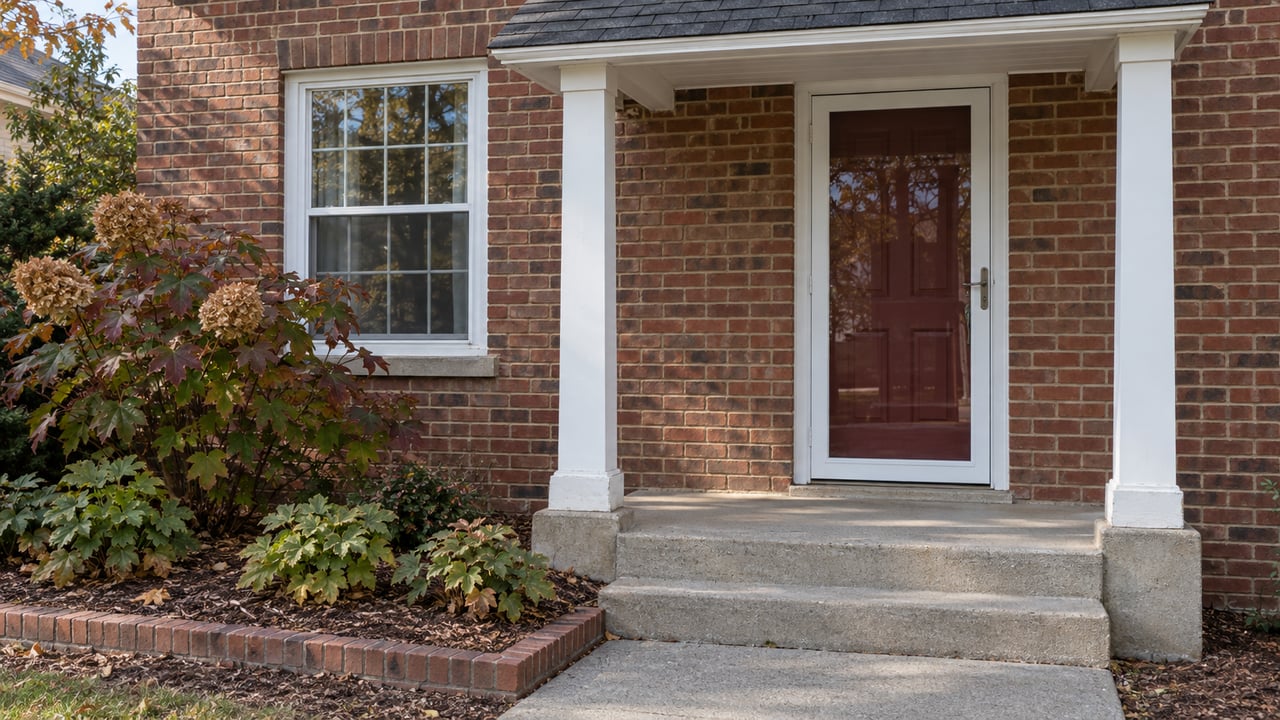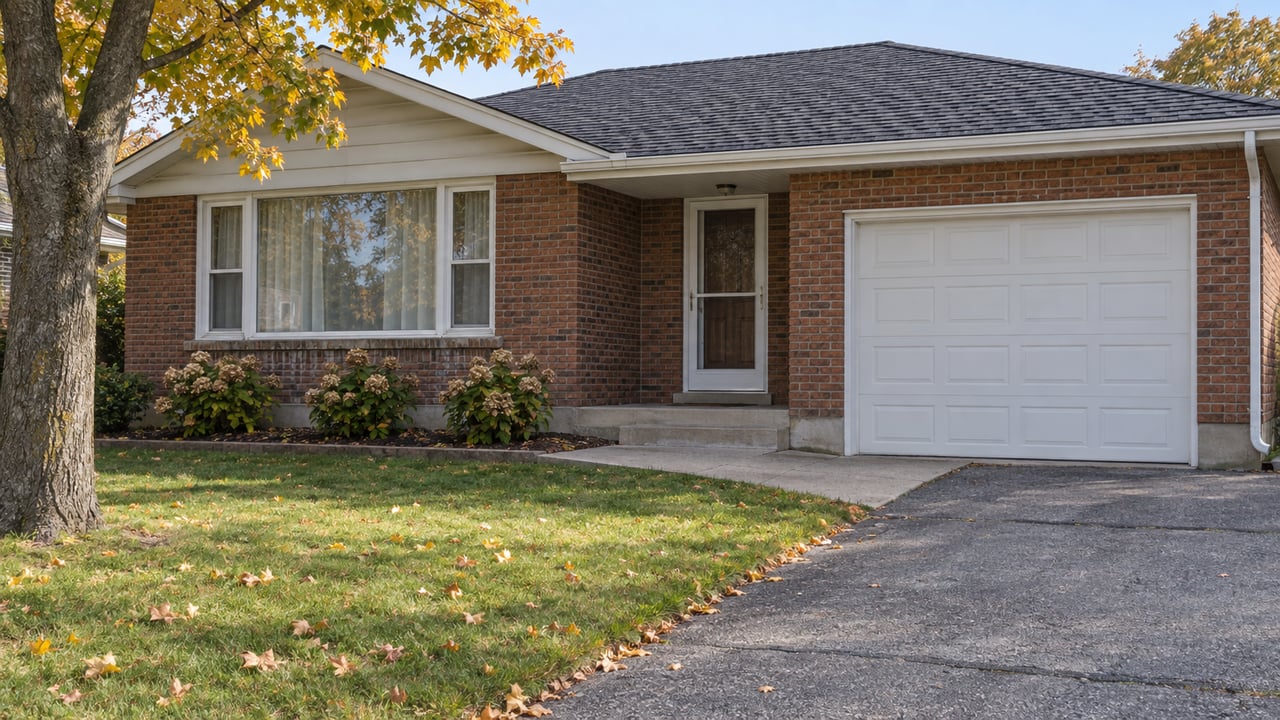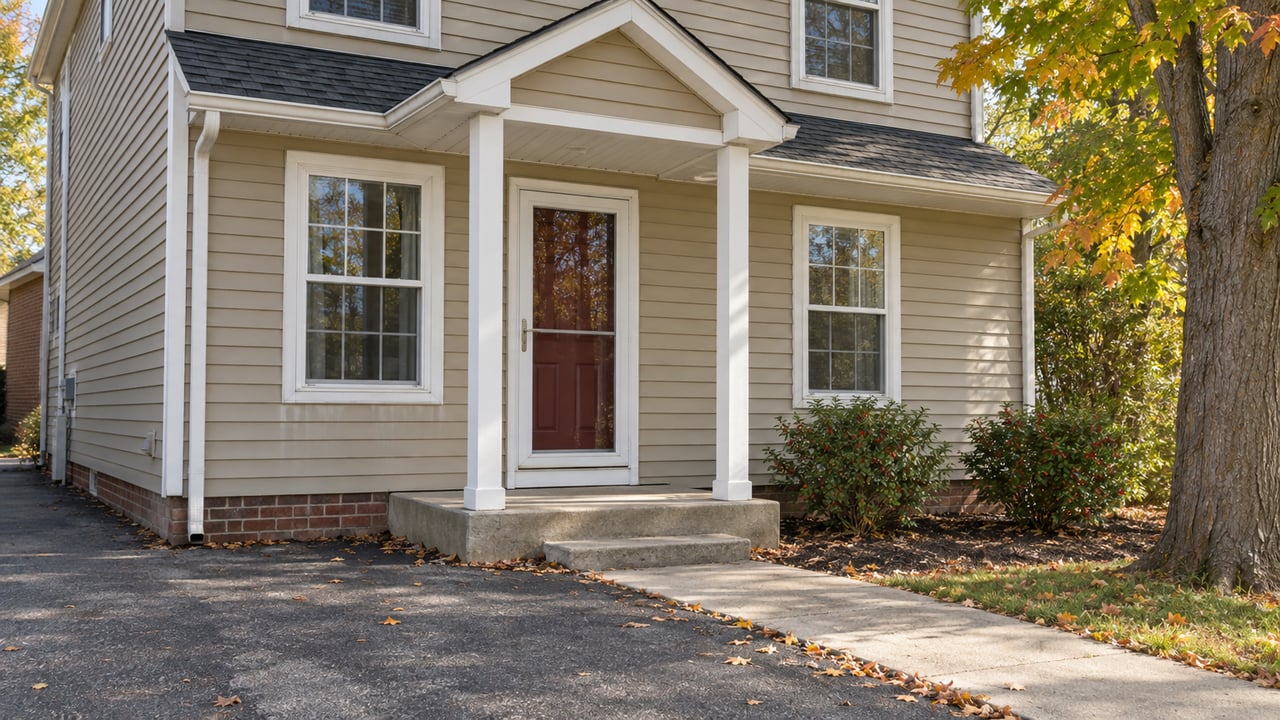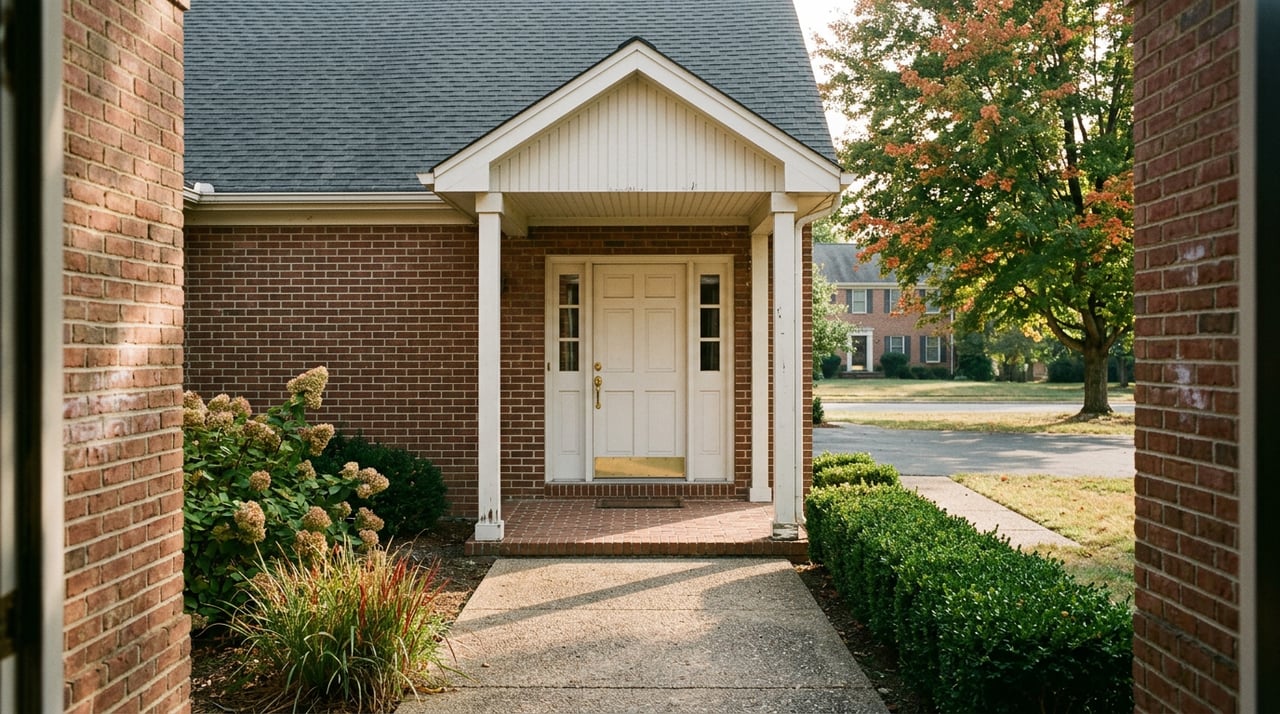
Pull up any Harris Hill listing on a Sunday afternoon and you can drive to it in ten minutes. Pull up two listings on adjacent streets and you might be looking at homes that share a school bus stop, a zip code, and a mailing address but sit in different towns with opposite tax trajectories. The listing photos will not tell you which is which. The MLS field labeled "town" will, but most buyers scroll past it.
That single line item is doing more work than the median price, the days on market, or the square footage. It is the mechanism that explains why two comparable brick Colonials on the Amherst side and the Clarence side of Harris Hill can carry five-year cost curves that look nothing alike.
The line nobody draws on the listing photos
Harris Hill is a hamlet, not a municipality. It spans the town line between Amherst and Clarence, and both sides feed the same public school system, Clarence Central. The elementary school at 4260 South Harris Hill Road carries a Williamsville 14221 mailing address but is operated by Clarence Central, which is where most of the buyer confusion starts. A listing can honestly advertise "Williamsville schools" or "Clarence schools" depending on how the agent reads the zoning, and neither answer is exactly right on its own.
Here is the split that matters, drawn from town-level data as of mid-2026:
| Harris Hill, Amherst side | Harris Hill, Clarence side | |
|---|---|---|
| Median sale price, trailing 12 months | ~$385,000, up 12% YoY | ~$385,000, up 5% YoY |
| Days on market | 26 | 19 |
| Recent town tax trajectory | +11.4% levy in the 2024 budget, roughly +38% over six years | 0% town tax increase over nine years |
| Reassessment posture | Recently completed townwide reassessment | Full townwide reassessment every four years, equalization rate of 80 |
The sale-price medians are almost identical. Everything downstream of the transaction is not.
Why one school district produces two price tiers
Zoom out to the town level and the price gap widens. Clarence townwide sold at a median of $610,000 over the three months ending May 2026, up 14.3% year over year, with homes going pending in 13 days and hot listings closing about 11% over list. Harris Hill's ~$385,000 median sits well below that because the hamlet holds most of the older, smaller housing stock in Clarence Central's footprint. It is where buyers get the district for the lowest ticket, and that alone explains the compressed days on market on the Clarence side.
Housing stock is part of the story. Most of Harris Hill was built between the 1950s and 1970s, with a grid of brick Colonials, Cape Cods, and ranches on lots big enough for pools and sheds but without sidewalks. Renovated houses in the hamlet trade from the low $200s into the mid-$500s depending on updates, which is a wide band for one zip code and a wider one for one school district.
Then there is supply. Clarence Supervisor Patrick Casilio has publicly noted that in one recent month the town issued exactly two residential building permits, compared with more than 400 homes built in Amherst in a full year. When demand for Clarence Central seats is running through Harris Hill's older housing, and Clarence itself is adding almost no new inventory, the 19-day DOM is doing the talking.
The tax trajectory buyers do not see until year two
This is where the two sides of Harris Hill actually diverge, and it is the part that closing statements will not warn you about.
Amherst raised its property tax levy 11.4% in the 2024 budget alone, and levies have climbed roughly 38% over a six-year window, per reporting from WKBW. Clarence, over roughly the same period, held its town tax rate flat for nine consecutive years, according to Casilio's public comments. Two houses with identical assessed values on July 1, 2025, do not carry identical tax bills a year later, and the compounding gets louder every cycle.
Assessment posture makes it messier. Clarence carries a state equalization rate of 80, meaning parcels are assessed at roughly 80% of full market value, and Casilio has acknowledged that assessments are not keeping pace with sale prices in the town. He has cited cases of a $150,000 assessed ranch selling above $300,000. The town's 2026 tentative assessment roll is using a uniform percent of value of 90 with a valuation date of July 1, 2025, so buyers closing this summer are stepping into a roll that already reflects recent appreciation but still trails what comparable homes are actually clearing at.
Translation for the buyer: on the Clarence side, your first tax bill likely reflects a lag between your purchase price and your assessed value. That lag is not a permanent discount. It is a countdown to the next four-year reassessment, which is exactly why the equalization mechanism exists.
What the assessment cycle means for your offer
Clarence bills property taxes on a rhythm that catches new buyers who moved from other markets. Town and county tax bills go out by mid-January and are due on or about February 15, with penalties escalating from 1.5% by the end of February to 7.5% by May 1. School tax bills go out by mid-September and are due around October 15, with an additional 7.5% penalty in the second half of October and 9% through November. Miss both windows and the unpaid balance rolls to Erie County collection at the Erie County Finance office at 95 Franklin Street in Buffalo.
Two friction points to price in before you write an offer on the Clarence side:
- If you are buying between a reassessment cycle and school-tax mailing, ask the seller for a copy of the current STAR/exemption profile. Enhanced STAR does not transfer, and losing it silently mid-year is one of the more common post-closing surprises on the Clarence side.
- On the Amherst side, price in the assumption that levies will not stay where they are. The last three budget cycles have not been kind, and Amherst's assessor's office has been clear that reassessments themselves do not raise revenue but redistribute it. In a market where Harris Hill sale prices are up 12% year over year on the Amherst side, that redistribution is unlikely to favor buyers of updated homes.
Reading Harris Hill listings differently
A quick field guide for anyone toggling between listings this summer:
- If a listing says "Williamsville, NY 14221" in the address but "Clarence" in the school district field, you are almost certainly looking at Harris Hill on the Clarence side. The mailing address is a post office boundary, not a school or tax jurisdiction.
- If the property tax figure looks improbably low relative to the list price, check the assessed value against the town's Property Record Online System. A 20% gap between assessment and asking is normal on the Clarence side right now. A 40% gap is a signal that the next reassessment will land hard.
- If a listing on the Amherst side leads with recent kitchen and bath updates, expect those updates to show up in the next assessment. Amherst's post-2024 reassessment used comparable sales as the primary input, and renovated Harris Hill homes were re-anchored to the higher end of that comp set.
New construction is changing the arithmetic on the Clarence side too. The Woodland Hills subdivision off Kandefer's Trail and the Marrano-built Advantage XI models at Northwoods Estates are pulling the top of the Clarence-side price band well above the hamlet's $385,000 median, and those homes will be entering the assessment roll at build-cost basis rather than at the lagging market comps that older Harris Hill homes still enjoy. If you are shopping older resale on the Clarence side, understand that your comps will increasingly be new-construction comps at the next reassessment.
FAQ
Is Harris Hill in Amherst or Clarence? Both. The hamlet crosses the Amherst/Clarence town line. Your property tax bill is tied to whichever town your parcel sits in, not to the Harris Hill name or the Williamsville mailing address.
Do all Harris Hill homes attend Clarence Central schools? The homes zoned to Harris Hill Elementary do, and Harris Hill Elementary is operated by Clarence Central. Confirm the exact zoning on the Town of Clarence's 2024 school district map before writing an offer, because the boundary lines follow specific streets rather than the hamlet's informal edges.
Why do Movoto and Homes.com show such different Harris Hill medians? Movoto's $959,000 figure reflects active list prices, which are pulled higher by a small number of new-construction and estate listings. Homes.com's $385,000 figure reflects trailing 12-month closed sales. For pricing an offer, use closed sales. For understanding what is on the shelf, list is fine as a directional check.
When will my taxes reset if I buy this year? On the Clarence side, the next full townwide reassessment is on a four-year cycle from the last one, with the 2026 tentative roll already reflecting a July 1, 2025 valuation date. On the Amherst side, expect the next assessment cycle to incorporate 2025 and 2026 sales, which are running above prior comps.
Harris Hill is one of the few pockets in the Buffalo suburbs where the address on the deed changes the math more than the address on the mailbox. If you are weighing a Harris Hill purchase this summer and want to pressure-test the tax trajectory before you write an offer, Benjamin Domagala can walk the assessment history parcel by parcel and tell you what your five-year cost curve actually looks like on either side of the line.