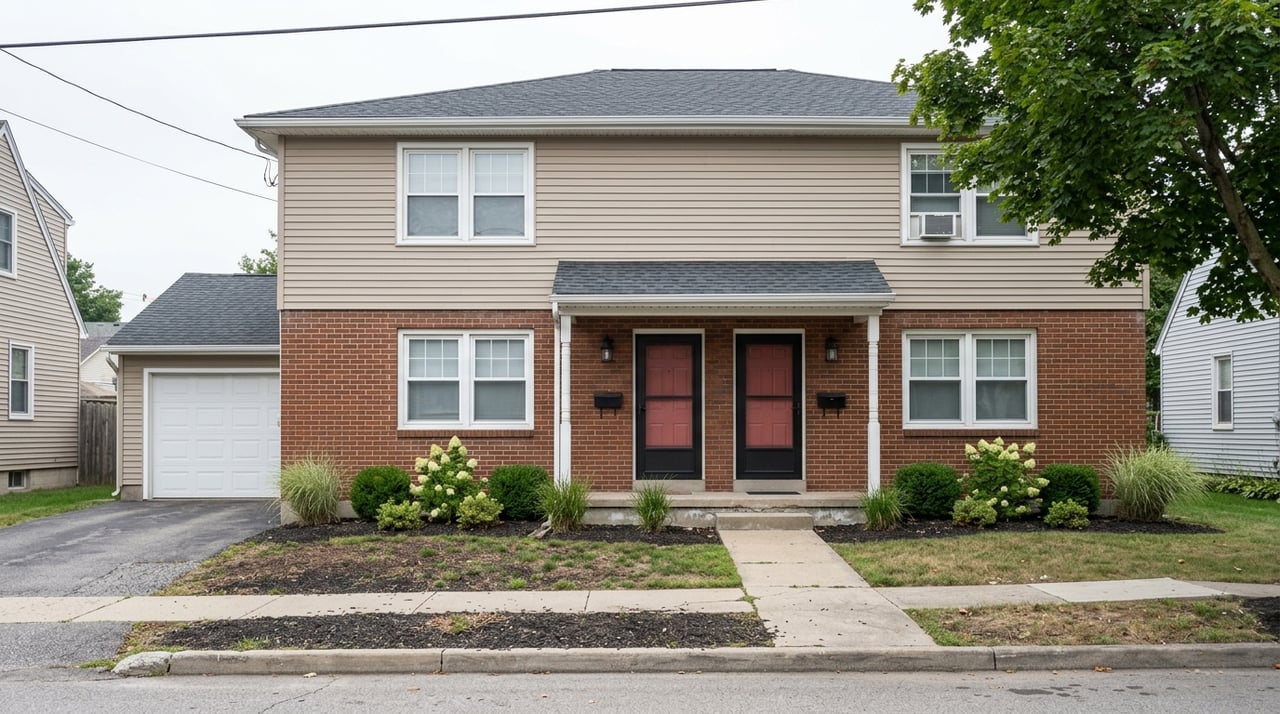
If you are looking at small multifamily property around Buffalo, Tonawanda can feel like the middle ground you have been trying to find. It is not as apartment-heavy as Buffalo, not as pricey as some Amherst-area options, and not as stretched on value as you might expect in a fast-moving suburb. If you want a clearer read on how Tonawanda compares for a duplex or small apartment investment, this breakdown will help you weigh the tradeoffs and decide where it fits in your search. Let’s dive in.
Why Tonawanda stands out
Tonawanda ZIP code 14150 sits in an interesting spot for small multifamily investors. Zillow puts the average home value at $255,822, up 2.7% year over year, while average rent is $1,319, up 4.1% year over year. Homes are also going pending in about 9 days, which points to a market where you need to be ready to move.
That combination matters if you are trying to balance entry price, rent potential, and speed. Tonawanda is not the cheapest market in the Buffalo area, but it still comes in below Erie County’s average home value of $291,901. It also offers a more suburban setting than Buffalo while staying close to the broader metro.
How Tonawanda compares on pricing
For many small investors, price is where the search starts. In 14150, the average home value is below North Tonawanda at $278,948 and well below Amherst-area 14226 at $312,360. That gives Tonawanda a more approachable entry point if you want to stay in a suburban part of the metro.
Compared with Buffalo, the picture is a little different. Buffalo’s average home value is $241,380, which is lower than Tonawanda. That means Tonawanda is not the absolute budget play, but you may be paying for a different housing mix and a less apartment-dense environment.
How Tonawanda compares on rent
Rent levels help tell the other side of the story. Tonawanda’s average rent of $1,319 is below Erie County’s $1,448 and below Buffalo’s $1,390. It is also below Amherst-area 14226, where average rent is $1,705.
At the same time, Tonawanda rents run above Cheektowaga’s average of $1,236 and above North Tonawanda’s $1,300. So while Tonawanda does not lead the area on headline rent, it still holds up reasonably well for a suburban market at its price point.
A quick yield screen
A rough gross-rent-to-value screen can be useful when you are comparing markets at a glance. Based on the research, 14150 comes in around 6.2%, compared with about 6.9% in Buffalo, 5.6% in North Tonawanda, and 5.8% in the Town of Tonawanda. This is not a cap rate, but it is a simple way to compare rent potential against values.
What does that mean in plain English? Tonawanda appears to land in the middle. Buffalo may offer stronger first-pass yield, while North Tonawanda trends toward slightly higher values with a lower rough yield screen. Tonawanda can make sense if you want a balance between suburban location and workable numbers.
What the housing stock means for investors
Tonawanda is not a market defined by towers or large apartment clusters. The 14150 ZIP has 20,271 housing units, and Town of Tonawanda data shows a housing base that is still dominated by single-unit structures. In the town profile, 72% of housing units are in single-unit structures.
That matters because your search for small multifamily here will usually feel different than it does in Buffalo. You are not shopping in a market where multifamily dominates the landscape. Instead, you are looking in a more established suburban housing stock where duplexes, two-family homes, and smaller apartment buildings exist alongside a larger number of single-family homes.
Tonawanda vs Buffalo for small multifamily
Buffalo is the clearer choice if you want a market with more multifamily density. Census Reporter data cited in the research shows 60% of Buffalo structures are multi-unit, and 53% of occupied units are renter-occupied. That makes Buffalo a very different kind of hunt for investors.
Tonawanda, by comparison, is more suburban in feel and more limited in multifamily supply. That can mean fewer options at any given time, but it can also appeal to investors who prefer older suburban neighborhoods over a denser urban setup. If your strategy depends on a wide pool of multifamily inventory, Buffalo may give you more to choose from.
Tonawanda vs North Tonawanda
North Tonawanda is often part of the same investor conversation, but it is not exactly the same profile. The research shows North Tonawanda at an average home value of $278,948 and average rent of $1,300. Its rough gross-rent-to-value screen comes in around 5.6%.
That suggests North Tonawanda may come with a slightly higher price tag and slightly lower first-pass yield than 14150. For some buyers, that may still work if the available property or location fits their goals. But on paper, Tonawanda looks a bit more favorable for investors trying to balance acquisition cost and rent potential.
Tonawanda vs Amherst-area options
If you have looked at Amherst-area property, Tonawanda may feel more reachable from a cost standpoint. The research puts 14226 at a median ZHVI of $312,360, with average rent at $1,705. Higher rents are attractive, but so is the higher entry point.
For small multifamily investors, that difference can shape financing, cash needed to close, and room for improvements after purchase. Tonawanda may not offer the same rent ceiling, but it may be easier to pencil out for buyers who want to keep leverage and upfront costs more manageable.
What property types are common
The Town of Tonawanda comprehensive plan gives helpful context for what exists in the local housing stock. Outside the Village, the plan described housing as about 74% single-family homes, 11% two-family homes, 4% triple or four-family homes, 6% buildings with 5 to 9 units, 3% with 10 to 19 units, and 3% with 20 or more units.
For a small investor, that tells you something important. Duplexes and small apartment buildings are present, but they are not the dominant product. You may need to spend more time waiting for the right fit, especially if you have a narrow buy box.
Expect older buildings
Tonawanda’s housing stock is also mature. The comprehensive plan said most housing was built between 1940 and 1959, with a median year built of 1954. That age profile is common in Buffalo-area suburbs, and it shapes how investors should think about inspections and renovation planning.
Older buildings can offer solid layouts and stable neighborhood context, but they also call for careful review of condition and update needs. If you are comparing Tonawanda with newer or more mixed-age markets, this is a practical factor that should stay front and center in your underwriting.
Inventory moves fast
One of the biggest practical takeaways is speed. Zillow shows 57 homes for sale, 35 new listings, and a median of 9 days to pending in 14150. That is not deep inventory, and it is not a market where you should expect a lot of negotiating slack.
For investors, this changes how you prepare. It helps to know your price range, financing comfort level, and property criteria before the right listing appears. In Tonawanda, hesitation can cost you more than in a slower market.
Who Tonawanda fits best
Tonawanda appears to fit the investor who wants a middle-ground Buffalo-area market. The research points to older housing, moderate entry pricing, and a tenant base that is less urban-dense than Buffalo while still benefiting from metro-area proximity. That can be attractive if you want a suburban setting without moving too far out.
It may be less appealing if you are chasing the highest possible first-pass yield or want a market with lots of multifamily inventory. The tradeoff here looks more like steadier upside than dramatic upside. For many small-scale buyers, that can still be a very workable investment profile.
The bottom line on Tonawanda
Tonawanda is not the obvious winner for every small multifamily investor, and that is exactly why it deserves a close look. It sits between Buffalo’s denser multifamily environment and some of the higher-priced suburban alternatives nearby. If you want a market with moderate pricing, reasonable rent support, and a more suburban feel, 14150 can make a strong case.
The key is going in with the right expectations. You are likely looking at an older, built-out housing market with limited inventory and a smaller pool of multifamily opportunities than Buffalo. But if that profile matches your goals, Tonawanda can be a smart place to focus your search.
If you want help comparing duplexes or small multifamily opportunities across Tonawanda and the broader Buffalo metro, connect with Benjamin Domagala for responsive, local guidance tailored to your goals.
FAQs
How does Tonawanda compare with Buffalo for small multifamily investing?
- Tonawanda is more suburban and less multifamily-dense than Buffalo, while Buffalo shows stronger rough gross-rent-to-value metrics and a much larger share of multi-unit housing.
Is Tonawanda affordable for first-time multifamily investors?
- Tonawanda can be approachable compared with higher-priced suburban areas like Amherst-area 14226, though it is still priced above Buffalo on average.
What types of small multifamily properties are common in Tonawanda?
- The local housing mix includes two-family homes, small 3 to 4 unit properties, and some 5 to 9 unit buildings, but single-family homes remain the dominant housing type.
Is Tonawanda a fast-moving real estate market?
- Yes. Research for ZIP code 14150 shows homes going pending in about 9 days, with relatively limited active inventory.
Does Tonawanda offer better rent potential than nearby suburbs?
- Tonawanda’s average rent is higher than Cheektowaga and slightly above North Tonawanda, but below Erie County, Buffalo, and Amherst-area 14226.
What is the biggest tradeoff for investing in Tonawanda small multifamily?
- The main tradeoff is that upside appears steadier than spectacular, and multifamily inventory is more limited than in Buffalo’s more apartment-heavy market.