Thinking about buying a duplex or a 2-4 unit in Lockport’s 14094 ZIP? Small multifamily here can offer solid entry prices and steady rental demand if you run the numbers carefully. You want clear guidance on rents, prices, underwriting, risks, and how to add value without overpaying. This guide gives you a practical playbook grounded in local data and resources so you can move forward with confidence. Let’s dive in.
Why Lockport small multifamily
Lockport sits inside the Buffalo–Niagara region, which means your tenant base can include commuters, local employees, and students from the wider metro. City summaries and regional data show Lockport as part of a broader labor market that helps support rental demand across economic cycles. You can review metro context and tenure patterns in these demographic summaries.
Local projects and community anchors also help. The city highlights downtown revitalization work, canal and lock restoration, and facilities like Cornerstone Ice Arena as drivers of visitor activity and investment momentum. That activity can support near-downtown rentals and medium-term demand around Canal Street and the business district. Explore current initiatives on the City of Lockport’s business and development page.
Affordability is part of the appeal. Lockport’s small-multifamily prices often start well below core Buffalo neighborhoods for comparable buildings. That lets you test an investment strategy with a smaller check while still accessing regional demand.
What you will find in 14094
Many small multifamily buildings in Lockport are older, wood-frame or masonry structures built in the first half of the 20th century. Expect the basics of older stock: smaller unit footprints, basements, and older mechanicals. That age profile can be an advantage if you budget correctly for maintenance and upgrades.
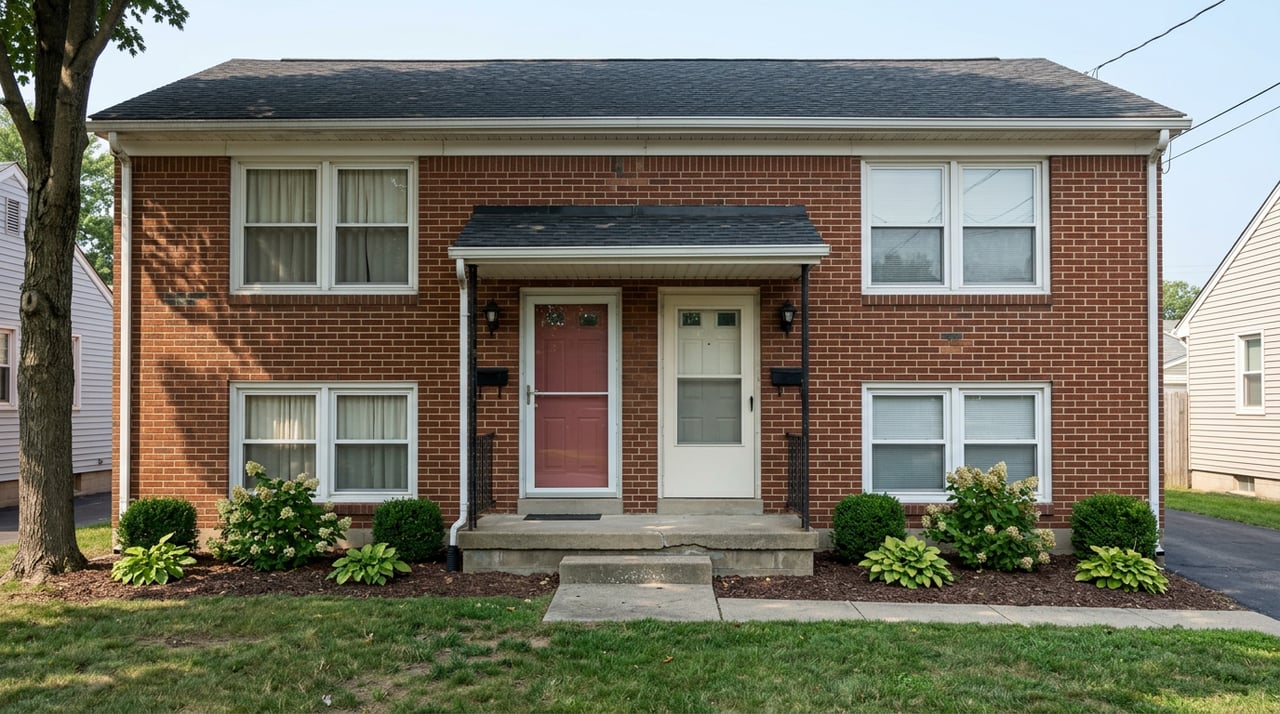
Common layouts include upper/lower duplexes or side-by-side two-unit homes. You will often see a 2-bedroom paired with a 1- or 3-bedroom, typically with 1 bath per unit. Parking varies by street. Older neighborhoods may offer only driveway or rear-lot spaces, so confirm what is included and what nearby street parking rules allow.
Utilities are a key diligence item. Separate electric and gas meters reduce your risk and simplify billing. If utilities are not separately metered, investigate allocation methods or the feasibility of splitting service during renovations.
Rents and price ranges to expect
Listing-based rent indexes put typical Lockport rents around the $1,000 per month mark overall. Recent data suggests about $750 to $850 for many 1-bedroom units and roughly $1,000 to $1,150 for many 2-bedrooms. Always verify with current local listings and leases when you underwrite, but you can use Zumper’s Lockport rent research as a starting point.
Recent recorded duplex sales in 14094 illustrate a broad range. Older properties that need work can trade in the low $100,000s. Renovated or larger two-unit homes can push into the mid-to-high $200,000s, with some small multis reaching the low $300,000s depending on condition and lot size. Use active and closed MLS comps within the last 6 to 12 months to set your price targets.
Underwriting basics that matter
Strong small-multifamily deals are built on realistic assumptions. These are the standard metrics you will use:
- Gross Rent Multiplier (GRM) = Purchase Price / Annual Gross Rent.
- Net Operating Income (NOI) = Effective Gross Income − Operating Expenses.
- Capitalization Rate (Cap Rate) = NOI / Purchase Price.
- Cash-on-Cash Return = Annual Pre-tax Cash Flow / Cash Invested.
Work from conservative inputs for vacancy and expenses. A mid-size market with older buildings often warrants a 5 to 10 percent vacancy assumption. You can see national vacancy context in HUD’s market summary. For operating expenses, many small-multifamily investors budget 35 to 45 percent of effective gross income for taxes, insurance, utilities, maintenance, management, and reserves. Learn how pros frame the operating expense ratio in this primer.
Property taxes are a major swing factor. Niagara County’s effective tax burden materially impacts cash flow, so pull the actual tax bill during due diligence and check for pending assessments. For quick background on local taxes, see this Niagara County property tax overview.
A worked Lockport example
Use this as a framework and swap in your actual numbers:
- Purchase price: $175,000.
- Rents: Unit A (2BR) $1,100 per month; Unit B (1BR) $800 per month. Total potential rent $22,800 per year. Reference local rent research and current listings to confirm.
- Vacancy allowance: 8 percent. Effective gross income ≈ $20,976 per year.
- Operating expense ratio: 40 percent of effective income. Operating expenses ≈ $8,390 per year.
Calculations:
- NOI ≈ $12,586 per year.
- Cap rate ≈ 7.2 percent ($12,586 ÷ $175,000).
- GRM ≈ 7.67 ($175,000 ÷ $22,800).
If you finance the deal, your cash-on-cash return will depend heavily on the interest rate, the down payment, and closing costs. Small shifts in rent, vacancy, or expenses can move returns significantly, so stress-test the model for one to two months of vacancy and add a capital reserve for near-term mechanical or roof work.
Value-add plays that work locally
Small Lockport buildings often respond well to a few targeted improvements:
- Turnover renovations. Fresh kitchens and baths, durable flooring, updated lighting, and better locks can lift demand and rents quickly in older units.
- Laundry upgrades. Adding or improving on-site or in-unit laundry (if plumbing allows) can support higher rent and tenant retention.
- Utility metering. Separating electric or gas meters, or improving allocation, reduces owner-paid utility costs and boosts NOI.
- Exterior and common areas. Roof repair, siding, porches, lighting, and landscaping improve curb appeal and reduce vacancy.
- Energy efficiency. Insulation, new windows, and high-efficiency heat lower operating costs. The city notes that energy programs and financing options may be available through local initiatives; start with the Lockport business resources and GLDC program page to explore what applies to your property.
Risks to budget and inspect
Older small multifamily brings predictable risks. If you budget early, you can turn them into manageable line items instead of surprises.
- Deferred capital needs. Roofs, boilers or furnaces, electrical panels, plumbing, and foundations often need work. Get a full inspection and contractor bids before you close.
- Lead paint and asbestos. Buildings constructed before 1978 can require lead-safe practices and specialized contractors during renovation. Build time and cost into your plan.
- Zoning and unit legality. Some homes were converted to multiple units historically. Confirm the certificate of occupancy and lawful unit count with the City’s Building Inspection and Planning/Code Enforcement early in due diligence. Start with the city’s planning and permitting contacts.
- Landlord–tenant rules. New York State sets important standards for deposits, eviction, and rent regulations. Review guidance from NYS Homes and Community Renewal and consult legal counsel for leases and procedures.
Step-by-step buying game plan
Use this simple process to evaluate your next Lockport duplex or 2-4 unit:
- Define the rent plan. Pull 6 to 12 months of recent local rental listings to set achievable rents by unit type. Cross-check with Zumper’s Lockport rent data.
- Confirm price bands. Gather 3 to 6 closed duplex or small-multifamily comps in 14094 from the last 6 to 12 months that match size, age, and condition.
- Build a conservative pro forma. Start with realistic rents, 5 to 10 percent vacancy, and a 35 to 45 percent operating expense ratio. Reference this OER guide for structure.
- Verify taxes and insurance. Pull the current tax bill and ask your insurance broker for a quote specific to the building’s age and systems. See this Niagara County tax overview for context.
- Inspect systems. Order a thorough home inspection and targeted checks for roof, HVAC, electrical, plumbing, foundation, and environmental hazards. Get written contractor estimates for any near-term work.
- Confirm legality. Contact the City of Lockport to verify the certificate of occupancy, lawful unit count, and any required rental registrations or inspections. Use the city’s business and development portal to find the right office.
- Model financing outcomes. Run multiple scenarios for rate, term, and down payment. Stress-test for rent variance and one to two months of vacancy.
- Identify value-add scope. Price out improvements like laundry, meter splits, and cosmetic upgrades. Consider whether local programs through the GLDC may support façade or rehab work.
- Set your walk-away number. Decide your maximum price based on target cap rate or cash-on-cash after reserves and financing.
- Execute due diligence on deadlines. Keep lender, attorney, and inspector timelines tight so you can negotiate credits or exit if surprises arise.
House-hack potential
If you plan to live in one unit and rent the other, focus on comfort, privacy, and long-term maintenance. Side-by-side layouts often provide more separation, while upper/lower units may deliver stronger rents if the upper unit is larger or more recently updated. Run your budget with an extra reserve for owner-occupant improvements and be realistic about noise, parking, and storage.
When to walk away
- Unit counts or permits cannot be verified after reasonable effort with the city.
- The tax reassessment risk or upcoming capital expenses erase your projected cash flow.
- Achievable rents fall short of underwriting by more than 10 percent.
- Inspection reveals major structural or environmental issues that exceed your reserve plan.
Local resources to bookmark
- City of Lockport business and development resources: lockportny.gov/businesses/
- GLDC and downtown revitalization information: lockportny.gov/gldc/
- Metro context and tenure data: proximityone.com
- Rent research starting point: Zumper Lockport rents
- Vacancy context: HUD national rental summary
- Operating expense framework: OER guide
- Niagara County property tax overview: PropertyShark tax info
- NYS landlord–tenant and rent-regulation resources: HCR overview
Ready to analyze a specific duplex or 2-4 unit in Lockport? Get local comps, rent targets, and a line-item underwriting review tailored to your goals. Reach out to Benjamin Domagala to start a focused search and run the numbers together.
FAQs
What are typical Lockport rents for 1- and 2-bedroom units?
- Listing-based indexes show about $750 to $850 for many 1-bedrooms and roughly $1,000 to $1,150 for many 2-bedrooms, but confirm with current local listings and leases.
What price range should I expect for a Lockport duplex?
- Older properties needing work often sell in the low $100,000s, while renovated or larger two-units can reach the mid-to-high $200,000s and sometimes the low $300,000s based on condition and lot size.
How should I estimate expenses for a small multifamily in 14094?
- Many investors budget 35 to 45 percent of effective gross income for operating expenses and use the actual tax bill and insurance quote to refine the pro forma.
What vacancy rate is reasonable to underwrite in Lockport?
- A conservative 5 to 10 percent vacancy assumption is common for older small buildings in mid-size markets; adjust based on property condition and management.
What inspections are most important for older duplexes?
- Prioritize roof, heating systems, electrical panels and wiring, plumbing, foundation, and potential lead or asbestos, then price out near-term repairs with contractor bids.
How do I confirm that each unit is legal in Lockport?
- Contact the City of Lockport’s Building Inspection and Planning/Code Enforcement to verify the certificate of occupancy and lawful unit count before you close.
Are there local programs that support renovations or energy upgrades?
- Start with the city’s business resources and GLDC program pages for potential façade, downtown rehab, or energy-efficiency initiatives that may apply to your project.