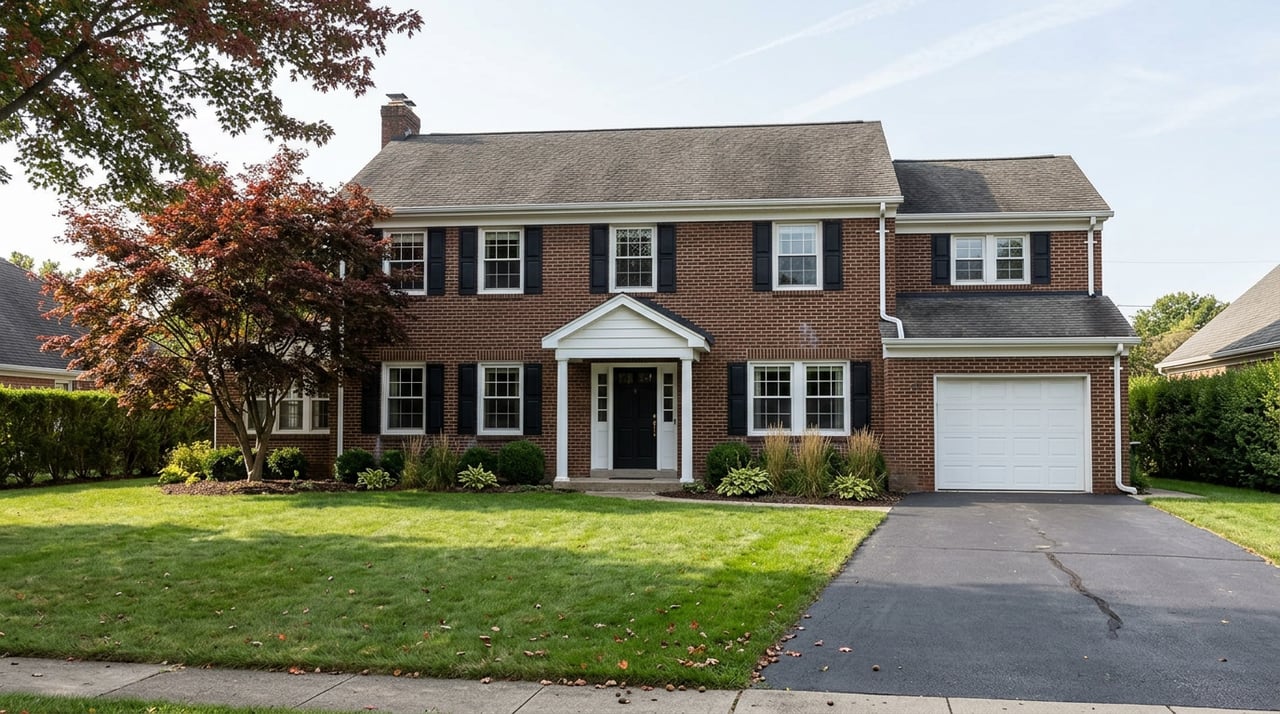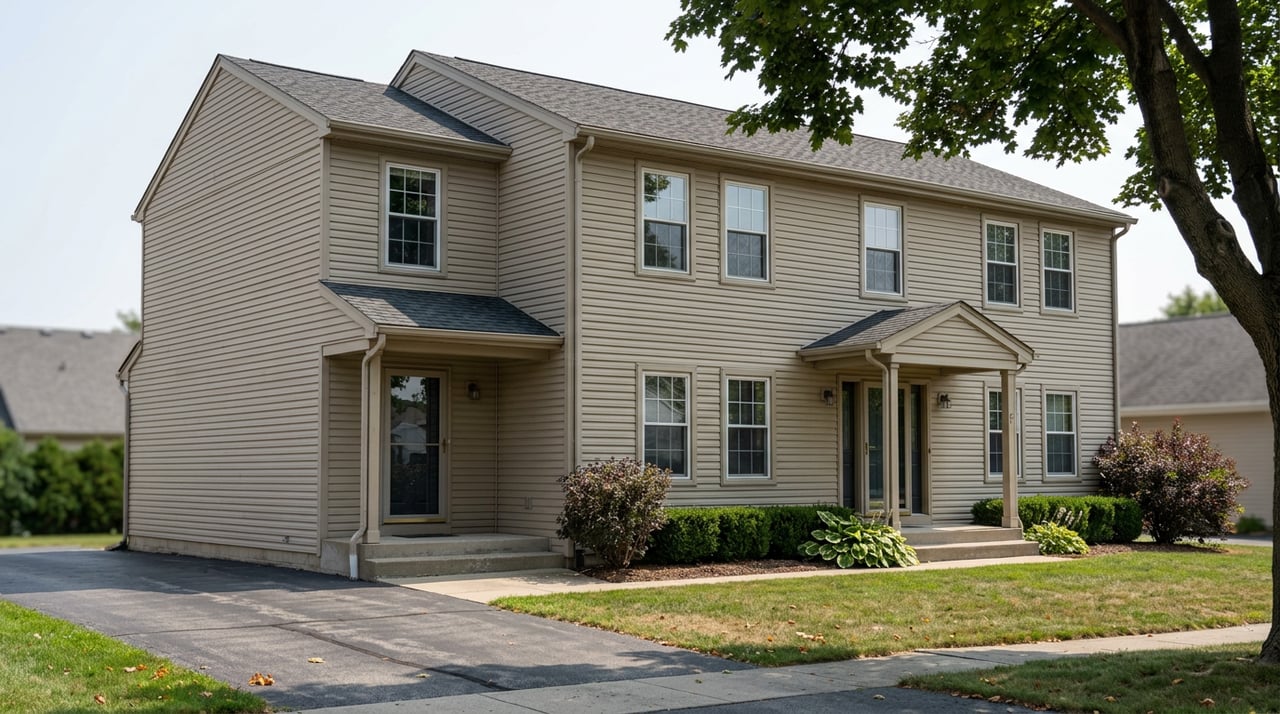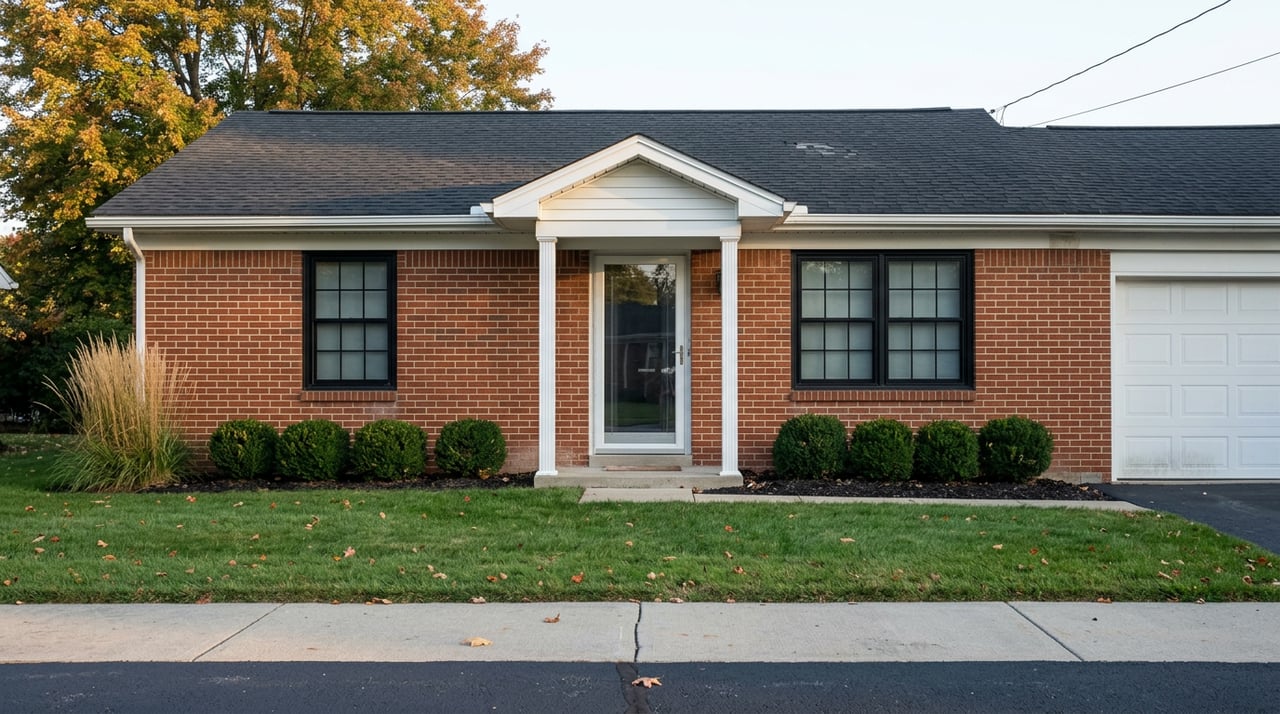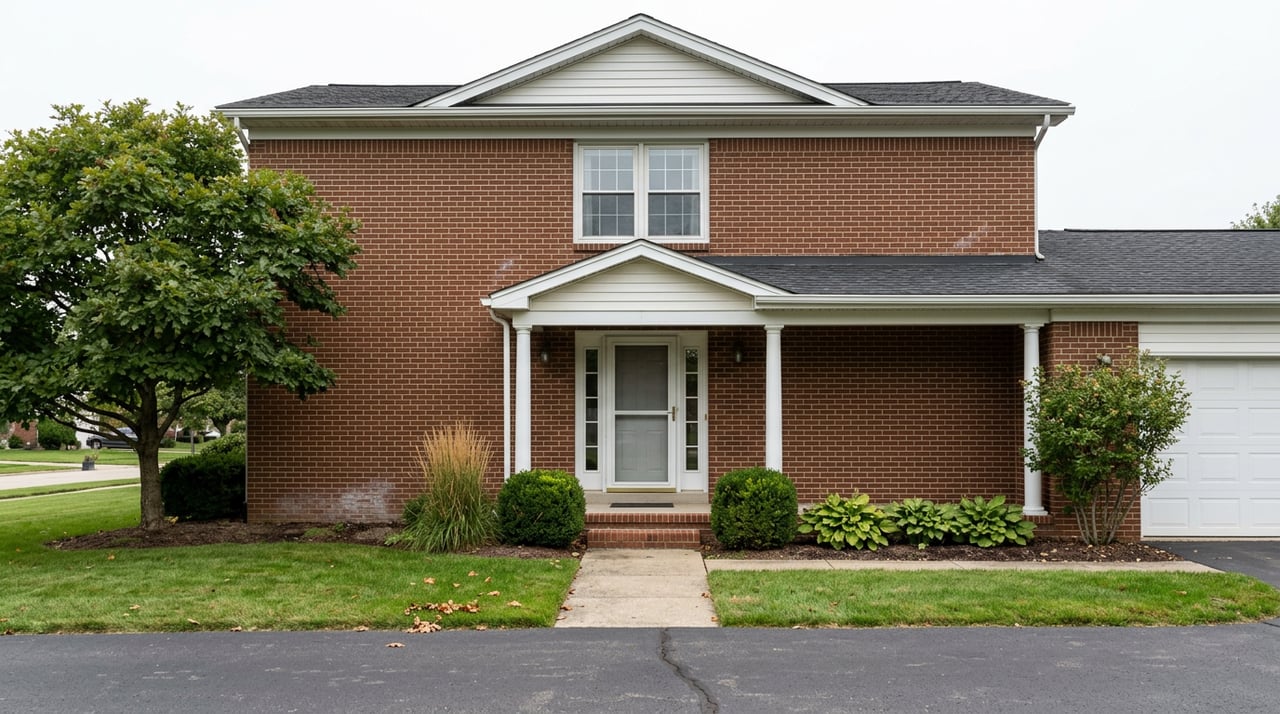
A two-bedroom house on Fay Street was listed earlier this year for just under $700,000. It has no pool, no addition, nothing that would normally put it in that price bracket. What it has is a location across the street from the new Highmark Stadium, fourteen years of history as a Bills Mafia tailgate spot, and enough name recognition that former quarterback Ryan Fitzpatrick commented on the listing announcement. A few blocks away on Big Tree Road, a 1,014-square-foot home listed for $750,000 this June, marketed almost entirely on the phrase "steps from Bills Stadium."
If you're comparing Orchard Park to another Buffalo suburb right now, those two listings tell you something true and something misleading at the same time. The true part: proximity to the new stadium is worth real money. The misleading part: it's easy to assume that premium is spreading across the whole town, and to assume the income potential attached to it (parking, short-term rentals, event hosting) is as open as the listing copy suggests. Neither assumption holds up once you look at what the town actually allows and how few sales it takes to move a median in a market this size.
The Income Pitch Every Near-Stadium Listing Makes
Properties within walking distance of Highmark Stadium get marketed differently than the rest of Orchard Park. Listings routinely lean on RV hookups, fifty-car parking capacity, and language about "game-day hospitality operations" or converting a lot to commercial use under B2 zoning. The pitch is straightforward: buy here, and the stadium becomes a built-in revenue stream ten to fifteen times a year.
The short-term rental numbers back up that there's real demand. As of July 2026, Orchard Park had 75 active short-term rental listings averaging $25,600 in trailing twelve-month revenue at 55% occupancy and a $251 average daily rate, with revenue up 16.4% year over year. That's a legitimate income line for a homeowner willing to manage bookings. It is also a fraction of what the parking pitch implies, and it says nothing about whether you can legally add a new lot of your own.
The Parking Rule That Predates the New Stadium
Here's the part that doesn't make it into most listing descriptions. Orchard Park's Town Board has barred new private parking facilities and expansions of existing ones within a mile of the stadium site since 2017, nine years before the new Highmark Stadium's ribbon cutting this June. The rule started as a temporary measure and was made permanent the following year. Violations carry fines of $100 to $400 per day. It doesn't roll back lots that already existed, like the well-known Hammer Lot, but it blocks anyone hoping to open a new one or expand an existing operation to catch overflow traffic from the new building.
The town is working on something more formal. Supervisor Joseph Liberti has said the goal is a permit system for commercial and private event parking within that same one-mile radius, targeted for 2027, with fees and enforcement details still under discussion as of this year. Until that system exists, the honest answer for a buyer hoping to monetize a driveway near the stadium is that the door is closed, not partially open.
If you're underwriting a purchase around parking income, that timeline matters more than the square footage. A property bought today for its game-day parking potential is a property waiting on a permit process that isn't expected before 2027 at the earliest.
Three Numbers, One Town, Thirteen Months
Pull Orchard Park's median home price from three different trackers and the timing turns out to matter as much as the source. In July 2025, more than a year before the new stadium opened, one tracker logged a median sold price of $395,000, up 31.7% from the year before. By February 2026, with stadium construction nearing completion, a separate tracker pulling zip-code-level data for 14127 put the median list price at $801,150, a 14.9% jump from $697,400 the year before, based on just 54 active listings that month. By August 2026, with the season underway, a third tracker's town-wide figure had settled at a $544,000 median list price, with homes spending a median of 17 days on the market, unchanged from the same month in 2025.
None of these numbers are wrong. They're measuring different things: a closed sale in one snapshot, a zip-level list price in another, a town-wide list price in a third. But the swings are large enough, and the timing lines up closely enough with the stadium's final construction push and opening, that a handful of outlier sales close to the stadium look like the likeliest explanation. When a tracker is working from a sample as small as 54 active listings, one or two properties like the ones on Fay Street or Big Tree Road, tiny houses priced at more than double what their size would normally command, can pull the whole median toward the stadium's gravity even though most of the town's inventory never gets close to that price point.
That's the mechanism worth understanding before you anchor an offer to any single number you find online. Orchard Park isn't uniformly more expensive this year. A small cluster of streets closest to the stadium is pricing at a level the rest of the town isn't, and depending on which handful of closings a tracker happens to catch, and when, the reported median can look dramatically different from month to month.
Where the Premium Actually Stops
If the stadium premium were lifting the whole town, you'd expect to see commercial development following it. So far, that hasn't happened. Earlier this year, with construction still finishing up, Supervisor Liberti warned that ancillary development around the site remained thin and that momentum needed to start immediately, since a hotel alone takes about a year to build once ground finally breaks. The town has also kept a two-and-a-half story height restriction on buildings closest to the stadium, and the open-air venue only draws large crowds for ten to fifteen events a year, a pattern that held for more than five decades at the old stadium without spurring much commercial buildout around it. Neighboring Hamburg is still working through its own zoning for the area, another sign that the broader corridor hasn't settled into a new identity yet.
Put together, this tells you the stadium's price effect is concentrated on a small number of residential blocks close enough to trade on tailgate history and walkability, not a rising tide lifting Orchard Park as a whole. A house two miles out is competing in the same market it was in last year. A house within sight of the stadium is competing in a different one entirely.
What This Means If You're Comparing Orchard Park to Somewhere Else
A few practical adjustments if you're weighing Orchard Park against another Buffalo-area suburb:
- Ask for closed comps within the specific radius you're targeting rather than trusting a town-wide or zip-level median. A house a mile from the stadium and a house within sight of it are not the same market.
- If parking or short-term rental income is part of your math, confirm with the town whether the use is grandfathered in or would depend on the 2027 permit system before you count on it.
- Separate list price from sold price when comparing sources. The widest gaps between trackers usually come from mixing the two rather than any real disagreement about value.
- Treat AirDNA-style occupancy and revenue figures as your income ceiling, not the marketing language on a specific listing.
FAQ
Is all of Orchard Park more expensive now because of the new stadium? No. The town-wide list price median was still $544,000 as of August 2026. The premium is concentrated on the handful of streets closest to the stadium, where individual homes have been listed for $700,000 to $750,000 well above what their size would normally support elsewhere in town.
Can I buy a house near the stadium and start a parking business for game days? Not right now if it would be a new lot or an expansion of an existing one. A moratorium covering a one-mile radius around the stadium has been in place since 2017, with fines of $100 to $400 per day for violations. A formal permit system is targeted for 2027 but hasn't launched yet.
Will the 2027 permit system open things up once it's live? The town has said that's the intent, but as of now the details on fees and enforcement are still being worked out. Any purchase decision should be based on the rules currently in effect, not on a framework that hasn't been finalized.
If you're trying to figure out what a specific Orchard Park street is actually worth, or whether a stadium-adjacent listing's income pitch holds up against what the town allows, Benjamin Domagala can pull the real comps and walk you through it. Get your free home valuation, or let's connect and talk through what you're comparing it to.